ROV in Aquaculture
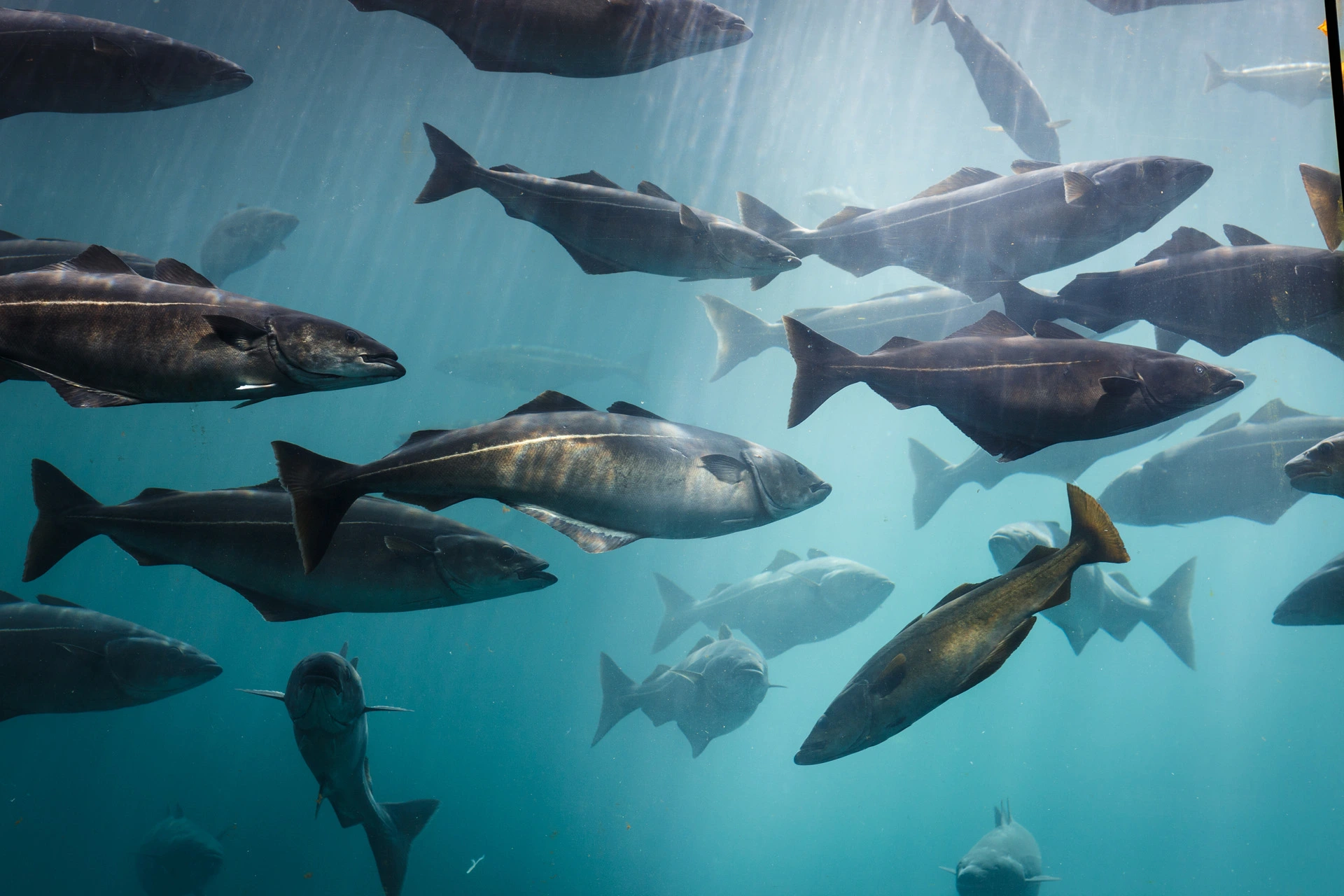
The ROV (remotely operated vehicle) has become a daily working tool in Norwegian aquaculture. Where a diver once had to be called out for every check of the net, moorings or fish welfare, the operator can now be in the water within minutes – several times a day if needed – with video that documents exactly what was seen. The result is closer follow-up, earlier warning of deviations and a lower cost over time.
SeaSpection is the Norwegian distributor of MarineNav Oceanus ROV systems and the only MarineNav dealer in Norway with a certified service workshop. We deliver systems configured for aquaculture use, with training, service and technical support from a single supplier. An ROV at the pen edge is one of the most concrete applications of ROV inspection as a method, adapted to the daily operations of fish farming.
How the ROV is used through the operating year
The value of an ROV in aquaculture lies not in a single task, but in one system covering the recurring inspection needs at the site – from daily checks to the most critical handling operations.
Daily net and pen inspection
Holes in the net are the dominant cause of escapes: according to SINTEF Ocean, holes in nets accounted for roughly 75% of all escaped farmed fish in the 2010–2018 period. Regular visual inspection reveals weak points, chafing against rings and seams, and damage from operations – before they develop. Video from each round builds a running condition history for every pen, making it easy to see whether a hole is new or developing.
Monitoring during and after handling operations
Fish handling – delousing, crowding, grading – is when the risk of damage to the net and equipment is highest. An ROV lets you verify the installation before the operation begins (has the cleaner fish been removed? are the equipment and skirt positioned correctly?), monitor during how the fish respond, and run an inspection round afterwards on the areas that were in contact with heavy equipment. It is precisely after major operations that most net holes occur, and a quick check immediately afterwards can be the difference between a small repair and an escape event.
Moorings, bottom chain and anchoring
Moorings are rarely inspected, yet a failure here has major consequences. With positioning and sonar the ROV can follow the bottom chain, shackles and fastenings and document their condition at depths where diving is costly or impractical. Regular control provides the basis for planning replacement before wear becomes critical.
Fish welfare and cleaner fish
HD cameras give insight into swimming patterns, appetite and behaviour – early signs of stress or disease. Early detection gives more room to act and a lower cost. The ROV is also used to assess whether the cleaner fish have the shelter intended, and to follow how the fish distribute themselves in the pen under different conditions.
Fouling and cleaning needs
Algae and shellfish on the net reduce water flow and oxygen. Inspection shows when and where cleaning is actually needed, rather than washing on a fixed schedule – saving both time and unnecessary wear on the net.
Site survey before stocking
Before investing in a new site, the ROV can map seabed conditions, current and terrain, so that the placement of the installation and moorings is based on actual observations rather than assumptions.
Documentation and regulations
Aquaculture is a documentation-heavy industry. Requirements for regular inspection and condition control of floating aquaculture installations follow from, among others, NYTEK23 and the NS 9415:2021 standard, and the Norwegian Directorate of Fisheries supervises the industry.
An ROV provides time-stamped video documentation that can be attached to reporting, used internally in non-conformance handling, and shared with authorities or insurers when needed. Combined with positioning data, each recording is tied to the correct pen and moment in time, so the documentation both meets requirements and gives a real basis for decisions on operations and maintenance.
The technology that makes the difference
This is where a professional ROV system differs from a simple underwater drone.
Topside control station. The Oceanus is operated from a dedicated control station in an IP-rated case – an 18.5" daylight-readable display (1600 nits), a secondary 10.1" touchscreen, an industrial i7 computer, 1–2 TB of storage and a physical hall-effect joystick. That means a readable screen in sunlight at the pen edge and stable control in weather that makes tablet and mobile solutions impractical.
Position Hold via DVL. On the Oceanus Pro and Ultimate, DVL holds the ROV stable against the current, so the operator can focus on the inspection rather than compensating manually – especially useful at exposed, high-current sites.
USBL positioning. With USBL you know which pen and area a recording comes from, and the video is time-stamped for verifiable documentation. USBL connects via RS232/RS485.
Sensors for condition control. A thickness gauge and CP probe document the condition of metal in moorings and fastenings; sonar gives an overview in poor visibility. The system can also carry a multiprobe for water quality and the Voyis Discovery Vision System for advanced visual data capture.
Relevant models for aquaculture
Oceanus Mini (10.8 kg)
Compact and light enough to be hand-launched by one person. Manoeuvres well between net and pen edge and is the model we recommend as the starting point for daily visual inspection at fish farms. Can be fitted with a gripper arm, thickness gauge and USBL positioning.
Oceanus Pro (17.9 kg)
Our best-selling model and the workhorse at larger sites. 400 m depth, six thrusters and three accessory ports. Supports Position Hold via DVL, sonar, USBL, rope cutter, thickness gauge and CP probe – the choice when you need stable inspection and more sensing than purely visual control.
If you need to carry more and more advanced sensors at once, the Oceanus Ultimate may be relevant. You will find a full comparison in the overview of our ROV models.
Effect on operations
Experience from farms that have adopted an ROV points in the same direction: inspections that once required planning and hiring can now be done in minutes when it suits. That means more frequent control, less need for hired divers, earlier intervention at signs of disease or damage, and running documentation that is easy to both report and use to adjust operations.
Training, service and support
An ROV system is an investment meant to last many seasons. As the only MarineNav dealer in Norway with a certified service workshop, we handle service and repair locally, and training and technical support come with the delivery. If the need arises, we will find a solution together.
Frequently asked questions
Does an ROV fully replace divers?
No, but it removes the need for diving on most routine checks and lets you inspect more often and more safely. Diving is reserved for tasks that genuinely require physical intervention.
Which model suits a typical fish farm?
We recommend the Oceanus Mini for daily visual inspection; the Oceanus Pro is the workhorse when you also need positioning, sonar and sensing. We recommend a model based on site, depth and tasks.
Can the ROV be used in current?
Yes. The Pro and Ultimate have Position Hold via DVL, which keeps the vehicle stable against the current during inspection.
How often should we inspect the pens?
Many run daily visual control, and more frequently around handling operations such as delousing. The advantage of owning an ROV is that frequent inspection becomes practical and affordable, so holes and damage are found before they lead to escapes.
Can we rent instead of buy?
Rental may be available on request. Get in touch and we will find the right solution.
Request a quote
Are you considering an ROV for your fish farm? We provide a professional assessment of your needs and can come out for a demo at the site. We respond within one working day. Request a quote.
Ikke sikker på hva du trenger?