ROV for Offshore and Subsea
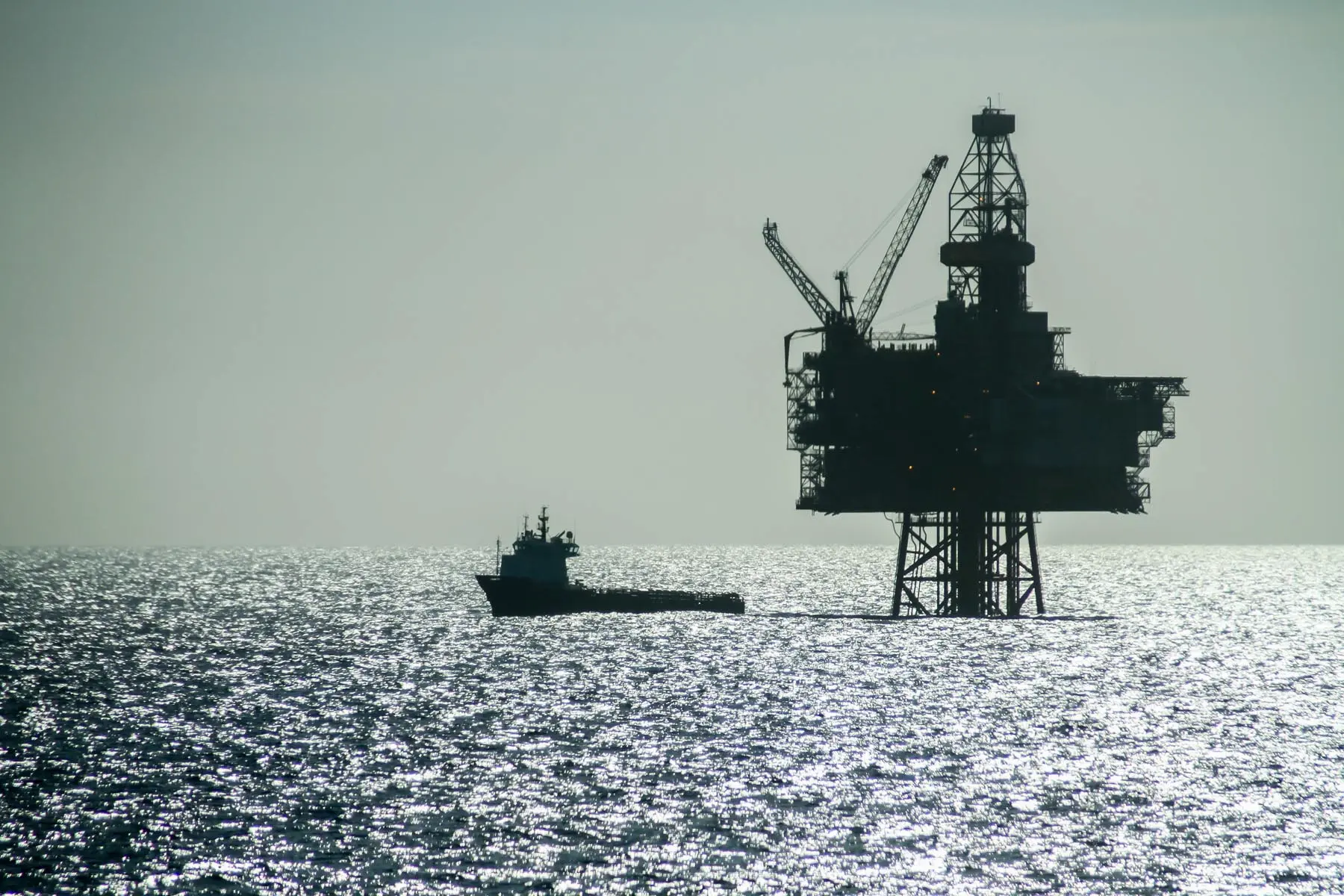
The ROV (remotely operated vehicle) has made offshore and subsea inspection both safer and more affordable. Instead of mobilising divers or an external vessel for every check, the condition of platforms, pipelines and subsea structures can be documented quickly – and as often as operations and regulations require. For operators with recurring inspection needs, that means closer follow-up, better data and a lower cost per inspection.
SeaSpection is the Norwegian distributor of MarineNav Oceanus ROV systems and the only MarineNav dealer in Norway with a certified service workshop. We sell and configure the equipment so that inspection capacity becomes your own – with training, service and technical support from a single supplier. Offshore and subsea are among the most demanding applications of ROV inspection as a method, where depth, current and documentation requirements place high demands on the equipment.
Build inspection capacity in-house
Many offshore and subsea tasks are outsourced to external ROV services today. That works for one-off jobs, but when the inspection need recurs, the calculation changes: owning an ROV means you can inspect when it suits operations, without mobilisation time or waiting for a third party.
- Your own crew, your own readiness. Train personnel in-house and reduce dependence on hired pilot services.
- Ready in minutes. The ROV is in the water when you need it, not when a supplier has capacity.
- Better data. More frequent inspection gives earlier warning of wear, corrosion and damage – and cheaper action.
For companies that already deliver ROV inspection as a service, we are the equipment supplier behind you: we sell the systems, not the assignments.
Applications in offshore and subsea
Pipelines and risers
Follow pipelines, risers and spools for leaks, free spans, burial and external damage. Time-stamped video gives traceable documentation per section, and repeated inspections make it possible to see whether a free span or damage is stable or developing.
Platform and structure control
Condition control of jackets, nodes and subsea structures. Detect cracks, deformation and marine growth before they develop. Growth also increases the load on the structure, so regular control provides the basis for planning cleaning.
Anodes and cathodic protection
With a CP probe the operator can measure potential and assess the remaining life of sacrificial anodes – a concrete maintenance basis, not just visual inspection. Timing anode replacement correctly extends the life of the structure and avoids unnecessary operations.
Cables and subsea installations
Monitor the laying and condition of power and signal cables, and document subsea installations during and after assembly. An ROV gives real-time eyes on the operation and a verifiable log that the installation was carried out as planned.
Hull inspection (UWILD/IWS)
Hull and propeller inspection of offshore vessels without taking the vessel out of service, for example in connection with UWILD/IWS inspections. The ROV provides the video documentation itself; class approval rests with the class society.
Survey and search
Seabed and sediment mapping for project planning, and locating lost objects. With sonar and positioning, the ROV can cover larger areas efficiently even in poor visibility.
Depth and demanding conditions
Subsea tasks are selected on depth and current. The Oceanus series operates to 400 m as standard, and the Oceanus Ultimate can be upgraded to 500 m. On the Oceanus Pro and Ultimate, DVL Position Hold keeps the vehicle stable against the current, so the operator can focus on the inspection itself rather than compensating manually – decisive at high-current sites and in deep water where every detail in the documentation counts.
The technology that makes the difference
This is where a professional ROV system differs from a simple underwater drone.
Topside control station. The Oceanus is operated from a dedicated control station in an IP-rated case – an 18.5" daylight-readable display (1600 nits), a secondary 10.1" touchscreen, an industrial i7 computer, 1–2 TB of storage and a physical hall-effect joystick. A readable screen on deck in any light, and stable control in weather that makes tablet and mobile solutions impractical.
Position Hold via DVL. Stable position against the current on the Pro and Ultimate – for precise inspection in deep water.
USBL positioning. Know where a recording was made, and time-stamp video for verifiable documentation. USBL connects via RS232/RS485.
Sensors for condition control. CP probe for anode measurement, thickness gauge for wall thickness, sonar for an overview in poor visibility. The system can also carry the Voyis Discovery Vision System for advanced visual data capture and a multiprobe.
Relevant models for offshore and subsea
Oceanus Pro (17.9 kg)
The workhorse. 400 m depth, six thrusters and three accessory ports. Supports Position Hold via DVL, sonar, USBL, rope cutter, thickness gauge and CP probe – the flexible choice for most offshore and subsea tasks.
Oceanus Ultimate (30.25 kg)
Carries more and more advanced sensors at once, with eight thrusters, dual HD cameras and an upgrade to 500 m depth. Relevant when the task requires heavier payload and deeper operation. Can be operated by a single experienced operator.
Oceanus Mini (10.8 kg)
Light and compact for shallower checks and confined areas – a more affordable supplement where full sensing is not needed.
You will find a full comparison in the overview of our ROV models.
Standards and documentation
Offshore and subsea inspection is carried out within an established framework of standards – including from DNV and NORSOK. An ROV provides time-stamped video documentation and measurement data that can be attached to reporting, used in maintenance planning and shared with the operator, class society or authority as needed. Combined with position data, each finding is tied to the right place, so the condition can be followed systematically from inspection to inspection.
Training, service and support
An ROV system is an investment meant to last many seasons in demanding conditions. As the only MarineNav dealer in Norway with a certified service workshop, we handle service and repair locally, and training and technical support come with the delivery. If the need arises, we will find a solution together.
Frequently asked questions
How deep can the ROV operate?
The Oceanus series operates to 400 m as standard; the Oceanus Ultimate can be upgraded to 500 m.
Does the ROV work in strong current?
Yes. The Pro and Ultimate have Position Hold via DVL, which keeps the vehicle stable against the current during inspection.
Does an ROV replace divers?
It removes the need for diving on most inspection tasks and lets you check more often and more safely. Diving is reserved for tasks that genuinely require physical intervention.
Can the ROV measure anodes and wall thickness?
Yes. A CP probe measures cathodic protection on anodes, and a thickness gauge documents wall thickness in metal – both can be mounted as a payload.
Should we buy or rent?
For recurring inspection needs, owning an ROV pays off quickly. Rental may be available on request for one-off projects – get in touch and we will find the right solution.
Request a quote
Do you need ROV capacity for offshore or subsea tasks? We provide a professional assessment based on depth, tasks and conditions. We respond within one working day. Request a quote.
Ikke sikker på hva du trenger?